Showing posts with label sorta true. Show all posts
Showing posts with label sorta true. Show all posts
Sunday, February 10, 2013
The Grand Tour pt 9: The Castle
It has been a long time since I was here last. The Grand Tour; so true, but more of a grand tour through the passing year and a half rather than through the memories of all that happened during the backpacking trip of my 20’s. Where have I been? Falling in love, getting married, settling in, and taking a shine to martinis and a movie rather than sweating out words. But even my new bride cannot completely unseat the mistress of my life — writing. She has caused as much trouble over the years, as any mistress would. Competing for attention, luring me away when inspiration heats my blood, filling me with jealous rage when she holds back the words. All of that aside, I’m back; but first, let’s finish the story of the Grand Tour of our poet maudit. Try to keep up with me now, I don’t want to linger too long over the last miles of the trip, the wrecked parapets, the supple village girls selling weaver’s wares, or the food that has gone cold in the underground bistro buried deep in the tunnels of Budapest. There are new stories to tell, so let us be done with it.

What better way to end a European trip than to stay in the servants quarters of a Netherlands’ castle? Odlef’s Uncle served as a preservationist and historian for Huis Houthakker. We called it the castle, though in truth it is a manor house built in the 1500’s, then renovated in the 1800’s with English gardens ringed by a mote, sweeps of gently rolling lawns set against groves of trees, cobbled paths winding through the ruins of arbor and sculptured Goths draped in lichen. A Dutch princess sold the property to an exiled emperor to take as his homestead, or more accurately, his decorative cage with guards of his former country stationed at the gate. The once great man could not sit idle for long, took up an ax and started chopping down tree after tree, splitting the logs, stacking coords of wood in the shape of a maze. He was soon known as The Woodchopper of D_. This went on for a few years until one morning, in mid swing, a bolt of lightning struck him dead and ended his exile, and incidentally, pointed the easy way out from the maze. The emperor’s faithful expats buried him on the castle grounds in a small mausoleum, built upon the very plots he cleared of trees. Rest now, rest.
We walked up the graveled drive, filthy jeans and muddied shoes, backpack slung over one shoulder, finding The Uncle sitting outside the castle gift shop, sipping a cappuccino and leafing through a stack of trade journals. He wore a pale blue linen suit with yellow bow tie, bright green socks and white leather shoes. A cane was propped against the other chair, though later I would observe no perceivable limp. He was mango shaped bordering on a pear. Smiles and handshakes, genuine excitement to hear of our travels and adventures, though his disappointment was palpable at our lack of sexual escapades to share with him: wink wink, no taste of the buttered French croissants, eh? No Italian puttanesca? You’re not holding out on me, eh? No Uncle, afraid not, though there was that Gypsy girl down by the Danube. Immediately, our mango soured - filthy things, filthy - and we moved on to our evening plans: wash up and welcome The Aunt over for dinner.
It will take me more time to linger over the memory of that dinner, and how best to capture the schizo Aunt and her tea party under the table. The mundane was put to bed that night like unwelcome children, while Netherland sprites were set loose to play. If I was an artist, what wonderful art I could put together of that night’s icons: the mote, the stone castle, postal envelopes brightly colored with crayon, smoked eels curling in and out through the windows and portcullis, and empty bottles of wine cart wheeling out of windows and kerplunking into the mote. Yes, it will take some care to capture The Aunt and her dinner, a gentle hand to catch the canary without breaking a wing.

Saturday, May 07, 2011
The Grand Tour pt 8: The Apple and the Sickle
Hills, gray and raining. Deep green forests. Heavy clouds hovered only a few feet above the ground, mingling with the tree tops. Budapest is the land in the clouds, mist glistening on hillside rocks barely glimpsed through the clouds.
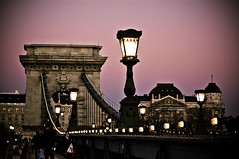
On our train ride from Budapest towards the Czech border, a girl and her mother rode in our compartment. The girl’s name was Regina, around sixteen or seventeen years old. Most beautiful girl in the world, sleeping next to me, pummeled in and out sleep on a rocking train.
For the second consecutive night I stayed awake, playing games of pretending to be asleep but with my eyes cracked open so as to peer unobserved on her sleeping face, cherub lips parted slightly to breathe. The mother fights sleep just as diligently, to keep watch over her gosling. I inched closer to the daughter’s side with glacial patience to obtain my objective; letting my arm fall to rest against her bare thigh, as though I simply shifted in my sleep.
In the morning, the sun rises on her face and she wakes up. Vibrant, talking to us about her favorite breeds of dogs and her home and her dreams of one day going to America. She wants to be pen pals and gives us her address. Even her mother warms to us in the morning light and invites us to stay with them should we ever find ourselves in Prague. We get off the train.
Odlef’s grandparents were wealthy and respected in this small Hungarian town. The grandfather was a respected doctor, with a hospital and a boulevard named after him.
The house is a stout stone structure, high ceilings and expansive rooms, with doors that are ten feet high. Thick stone walls keep the rooms cool during the day, and in the early evening we close the shutters over windows barred to keep out theives. Portraits hang on the walls of the family ancestry, from oils to black and white photographs of ancestors, grim and strong. A bishop stands on a balcony in a Transylvanian church. His wife, the tragedy figure, died young from tuberculosis.
There is a garden out back with cherry, nut, and plum trees, squares of flowers, isles in purple bloom, perfumed. The weeds are growing high so Odlef wanders through the garden with a sickle in hand, broad sweeping arcs sculpting the garden, chopping down what does not belong.
Look out back, past the gardens to the property beyond. See the steep roof, stained chimneys and lightning rods? This is their original mansion, taken away by communism. They are in the courts to take it back. They have plans, Odlef’s father and uncles, to reclaim that which was taken and to restore what has decayed. But some things are gone. Russian soldiers had taken the house, shit in the tub, and stolen the silver. Some spoons and knives were found later, scattered across town. But the fine china and teapots now sit in Russian cabinets.
Wednesday, January 19, 2011
The Grand Tour pt 7: Scarecrow Hill
I sit alone on the sidewalk outside of the locked house in Balassagyarmat. Mad dog howling of hunger, smaller dogs yapping a refrain, a bloodied wart seeps on my arm, sticky crimson and dirt. I practice the words in Hungarian, “Odlef K_, gone to get the key,” accompanied with gestures as though I am performing a pantomime. I can see myself through a local’s eyes; a foreign mantra of a long haired bleeding American shaman who drawls his words with a palsied tongue.
Church bells are tolling the hour: hear that cacophony of dogs?
We ride the bus from Budapest to Odlef’s house in Balassagyarmat, only a few miles from the Czech border. The bus coasts down winding hills, then chugs up the next incline, working itself to near collapse until a moment of reprieve. I knew the feeling. We pass a hillside crop of berries guarded by scarecrows draped in linen sheets. Like wraiths they are, flapping in the breeze, not just in shapes of human form, but also of underworld creatures, horse-like and spectral. What I wouldn’t give to sneak out to the hill on a moonlit night, with a light breeze bringing the celebration to life, with Bosch holding court at the center of the gathering.
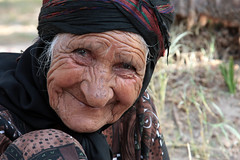
As we near the smaller villages, we come across old peasant women walking along the roadside in their rapid, hunched over gaits. Widowhood veils their faces in black scarves, toothless smiles at nothing but the hot sun beating down on them, their joints creaking on the way to market, alone, only a few vegetables to buy now that the husband has died and the children left. She looks up to passengers in the windows of the bus. I search her face for self-pity but find none here, at least none detectable from the foreigner’s outside observations, wordless and passing.
Church bells are tolling the hour: hear that cacophony of dogs?
We ride the bus from Budapest to Odlef’s house in Balassagyarmat, only a few miles from the Czech border. The bus coasts down winding hills, then chugs up the next incline, working itself to near collapse until a moment of reprieve. I knew the feeling. We pass a hillside crop of berries guarded by scarecrows draped in linen sheets. Like wraiths they are, flapping in the breeze, not just in shapes of human form, but also of underworld creatures, horse-like and spectral. What I wouldn’t give to sneak out to the hill on a moonlit night, with a light breeze bringing the celebration to life, with Bosch holding court at the center of the gathering.
As we near the smaller villages, we come across old peasant women walking along the roadside in their rapid, hunched over gaits. Widowhood veils their faces in black scarves, toothless smiles at nothing but the hot sun beating down on them, their joints creaking on the way to market, alone, only a few vegetables to buy now that the husband has died and the children left. She looks up to passengers in the windows of the bus. I search her face for self-pity but find none here, at least none detectable from the foreigner’s outside observations, wordless and passing.
Wednesday, December 22, 2010
The Grand Tour pt 6: Santa Croce Rain
Dark clouds gather at the end of streets and behind towers. We rush to a square outside Santa Croce and lie on our backs over the cobblestones, watching those etched clouds swirl and bulge, swell and recede. Then came the rain. I saw individual raindrops plummet from the sky and land on my cheeks. When the rain started to come too strong, we crowded into the church with the others.
A downpour and thunder fills the square, driving away the tourists that crowded beneath shop awnings. The church becomes too crowded, so we take shelter beneath a network of scaffolding used to restore the old building. I crouched among the skeletons of scaffolding and stone and sang the blues in the key of an exhaust fan humming nearby; “I’m soaked to the bone and I feel like goin’ home…”
The rain lets up and the square is like a gilded mirror. Two blond girls are the first to venture out, walking brightly across this somber space. Patches of bright blue color the sky like the first strokes of a paintbrush on old canvas.

A downpour and thunder fills the square, driving away the tourists that crowded beneath shop awnings. The church becomes too crowded, so we take shelter beneath a network of scaffolding used to restore the old building. I crouched among the skeletons of scaffolding and stone and sang the blues in the key of an exhaust fan humming nearby; “I’m soaked to the bone and I feel like goin’ home…”
The rain lets up and the square is like a gilded mirror. Two blond girls are the first to venture out, walking brightly across this somber space. Patches of bright blue color the sky like the first strokes of a paintbrush on old canvas.
Saturday, December 04, 2010
The Grand Tour pt 5: Lamentations no. 1
Lost in a hotel room that is too large for me, a high ceiling, vast tile floor and a tiny chair. Where am I? Rome, I think, a beehive of cobbled streets, twisting alleys and whirring scooters. What street is this? Foreign drawl of a street name like the last words of a villager struck down by cholera. I’m lost in a city where I am lost in the hotel where I am lost in the room and where I am lost in this chair.
Walking now, marching twenty strides behind Odlef, a clumsy limp and with each step a wince of pain from the blister on my pinky toe. This little piggy is squealing “SHIT FUCK PISS” all the way home. The sun beats on Rome, bakes the stones and I walk on the coals. Dry air sucks moisture from my eyes. Trembling, hungering, baking, I fall out of the flowing current of pedestrians to lean against a wrought iron fencepost. I try to find my happy place inside my head, but all of my memories seem far away, across the ocean. But here’s one now: childhood days sprawled on the grass with the family dog. Playing kick-the-can with Mike and Jane. First snow of the year and I’m standing at the neighbor’s door, “Can Jane come out and play?” There now, something looks familiar. I remember every detail about a split second of those days.
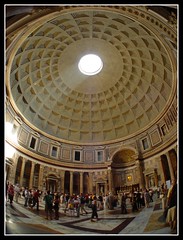
Sometime during these musings I have fallen back in line behind Odlef, and I fully awaken as he comes to a stop. Look up, there is a heavy solid dome stretched above our heads, an open circle at the apex, a sunbeam shining through the cool moist air onto marble floors. This is the Pantheon.
Walking now, marching twenty strides behind Odlef, a clumsy limp and with each step a wince of pain from the blister on my pinky toe. This little piggy is squealing “SHIT FUCK PISS” all the way home. The sun beats on Rome, bakes the stones and I walk on the coals. Dry air sucks moisture from my eyes. Trembling, hungering, baking, I fall out of the flowing current of pedestrians to lean against a wrought iron fencepost. I try to find my happy place inside my head, but all of my memories seem far away, across the ocean. But here’s one now: childhood days sprawled on the grass with the family dog. Playing kick-the-can with Mike and Jane. First snow of the year and I’m standing at the neighbor’s door, “Can Jane come out and play?” There now, something looks familiar. I remember every detail about a split second of those days.
Sometime during these musings I have fallen back in line behind Odlef, and I fully awaken as he comes to a stop. Look up, there is a heavy solid dome stretched above our heads, an open circle at the apex, a sunbeam shining through the cool moist air onto marble floors. This is the Pantheon.
Saturday, November 20, 2010
The Grand Tour pt 4: Toulon Postcard
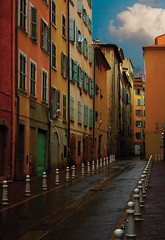
Old sailors grounded in Toulon sit on doorsteps throughout the day, sipping beer in the mornings, biting their fingernails in the afternoon, tasting the dirt on their tongues. Their skin is deep brown and liver-spotted, tattoos of ships broken up on their withered arms. Cobblestone alleys lead crookedly toward the Mediterranean shore. Speakers hang over the streets, tangled in lines of wire and cable, bringing the streets alive with American sixties songs. In the farmers' market, hordes of tourists shout in broken French with the vendors, a tangle of hands shuffling honeydew melons and yellow plums and paprika. Further up the avenues, away from the shoreline, the streets grow quiet. In the squares, lovers mill about with entwined arms or sat in patio cafes waiting patiently for their drinks. A fountain stood in the center of a square, water trickling down a swell of moss and vines, dripping into a pool. A blackbird fluttered in the shallows, water beading its feathers.
We stay at the hotel Le Petit Chateau and wash our clothes in the boudoir with hand soap. Eating sandwiches of liverwurst, sardines, and tomatoes on a fresh baked baguette, Odlef sits on the windowsill looking out over the chaotic jumble of flats with red-tiled rooftops. In the afternoon we buy three bottles of chilled white wine, drink in the night and come alive; this is our daily ritual, to be followed by numb, wordless mornings. My life is something like water: without taste, bland, lacking intoxication, even here in France. That is why I reach for the wine bottle.
I write a postcard to a friend back home. There is too little space to cover everything going on, so I decide it best to describe only the items on the table in our room:
- crusts of stale French bread
- two husks of beach melon
- two plums from the farmers market (yellow)
- two half full bottles of white wine
- ashtray, filled (one pack)
- Paris guidebook (tattered)
- Rome guidebook (pristine)
- backpack strap (useful) and an American penny (useless)
I take Odlef’s spot on the windowsill and claim my perch four stories above the street. Sallows fly in circles above the fountain in the square. Church bells toll the evening vespers. Pickpockets withdraw from their day of work, street urchins laugh into the face of the coming night, and a dog kills a cardboard box.
We stay at the hotel Le Petit Chateau and wash our clothes in the boudoir with hand soap. Eating sandwiches of liverwurst, sardines, and tomatoes on a fresh baked baguette, Odlef sits on the windowsill looking out over the chaotic jumble of flats with red-tiled rooftops. In the afternoon we buy three bottles of chilled white wine, drink in the night and come alive; this is our daily ritual, to be followed by numb, wordless mornings. My life is something like water: without taste, bland, lacking intoxication, even here in France. That is why I reach for the wine bottle.
I write a postcard to a friend back home. There is too little space to cover everything going on, so I decide it best to describe only the items on the table in our room:
- crusts of stale French bread
- two husks of beach melon
- two plums from the farmers market (yellow)
- two half full bottles of white wine
- ashtray, filled (one pack)
- Paris guidebook (tattered)
- Rome guidebook (pristine)
- backpack strap (useful) and an American penny (useless)
I take Odlef’s spot on the windowsill and claim my perch four stories above the street. Sallows fly in circles above the fountain in the square. Church bells toll the evening vespers. Pickpockets withdraw from their day of work, street urchins laugh into the face of the coming night, and a dog kills a cardboard box.
Sunday, November 14, 2010
The Grand Tour pt 3: Straw Dogs
Odlef and I follow a tour in a Paris guidebook in which you pretend you are walking through Montparnasse during the Lost Generation of the 1920’s. It is as though we are two starving nihilists who, armed with the guidebook, torch everything in the city while preserving only those great artifacts from Gertrude Stein’s Montparnasse. We see a new restaurant called the Hippo Grill; it does not exist. There is a café called Le Select, but at this hour in the tour guidebook there are no people. But I see the people, smoking, reading papers, making all of the correct motions of intellectuals, and yet we drop the curtain on their play; they do not exist.
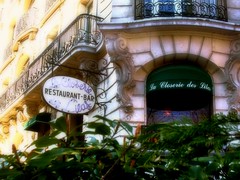
We are poor and unknown. We smoke cigarettes on the curb outside of Closerie des Lilas. We cannot sit at the tables of Hemmingway and Fitzgerald. This is how we visit the cafes. This is our straw dog generation. Intoxicated on hunger, road fatigue, anonymity, and yet irrevocably present. Our goal is to become known, our ideas to become respected, or at least to have our presence affirmed, but according to the guidebook, we don’t exist either. There are only the ghosts of Ernie and Ezra huddled around a sidewalk table, and we are but the smoke from their cigarettes. What have we done to deserve our place at the table? Nibble the crusts of bread from the curb outside the cafés? Follow history from a tourist book and follow the movements dictated in a game of Simon Says? Perhaps Jim Morrison, too mythified and all too godlike in my eyes, said it best: “Where is the new wine, dying on the vine?” We need to kill our gods to take their seat.
We are poor and unknown. We smoke cigarettes on the curb outside of Closerie des Lilas. We cannot sit at the tables of Hemmingway and Fitzgerald. This is how we visit the cafes. This is our straw dog generation. Intoxicated on hunger, road fatigue, anonymity, and yet irrevocably present. Our goal is to become known, our ideas to become respected, or at least to have our presence affirmed, but according to the guidebook, we don’t exist either. There are only the ghosts of Ernie and Ezra huddled around a sidewalk table, and we are but the smoke from their cigarettes. What have we done to deserve our place at the table? Nibble the crusts of bread from the curb outside the cafés? Follow history from a tourist book and follow the movements dictated in a game of Simon Says? Perhaps Jim Morrison, too mythified and all too godlike in my eyes, said it best: “Where is the new wine, dying on the vine?” We need to kill our gods to take their seat.
Sunday, November 07, 2010
The Grand Tour Pt2: Atlantic Crossing
I am on the plane somewhere over the Atlantic Ocean. Blackness fills the window; I have no fear of the ocean because I cannot see it. Yet it is there, those churning depths, those sharks and whales just below my body suspended in space, but right now I feel no nearer to the ocean than when I was lying in my bed in Iowa, imagining my Atlantic crossing. In fact, I was closer then. My room was dark. This plane is filled with light, stewardesses handing out blankets, and men with their shoes off to air out their stinking feet; this is my version of the Grand Tour, 21st century style.
How did I do it? How did I manage in one year to get thrown out of the Iowa writing program for mental indiscretions, move back home with my mom, and get signed up for this trip to Europe with a Dutch nobleman, Odlef? I paid for it myself, working a job that few people wanted at a local park, dumping garbage barrels, cleaning piss off of urinals, and waking up the drunks from the picnic tables where they had bedded for the night. More than the money, I had to overcome my natural Midwestern stoicism by staring off of that cliff face of doubt—and jump. Everyone tried to hold me back with that moral they held in such high esteem: stay home, stay grounded, and be realistic. But this was real. I imagined, I created, I formed in one flash of daydream this trip to Odlef’s Europe, and made it real. It was no different than writing a short story at the university, only I changed the medium. I became my own work.
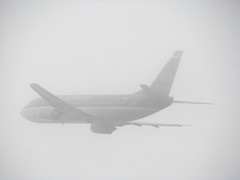
I had to wait in Boston for a connecting flight. We were delayed because dense fog had had crept in from the harbor. Out of the fog rose boat masts, warped shacks, seagulls navigating the air above the waters. I saw a guy stranded at the same gate who looked altogether too much like me—same black leather shoes, faded jeans, unbuttoned flannel shirt and a tangle of bracelets around his wrists. He started up a conversation with me, the typical harmless banter of plane schedules and travel plans, until out of nowhere he interjected, “They shouldn’t cancel flights just because of a little fog. I think those people that are afraid to die should just die right on the spot, because they’re not really living, man.” Was this what I sounded like? Idiot, blowhard, self-important fraud. My Muses snickered from behind a potted palm while I ended our conversation at the first opportunity and tried to put some distance between me and my doppelganger. He was hard to shake. Now back on the plane, I’m thankful for assigned seats.
Odlef meets me at the Amsterdam airport. He has transformed himself once again after having left ISU. Back then he was a foreign exchange student, a fellow drinking buddy, a budding artist who, back home in the Netherlands, was a nobleman’s grandson and an economics prodigy destined for a career in global markets, but who in one year in the states took on charcoal life drawing, German philosophy, and Beethoven’s Sonata No.1 in F Minor on the piano in the dorm lounge. He grew his hair out just long enough to fit into a ponytail, tried to grow a scruff of blond whiskers on his eighteen-year old chin, and took to wearing long overcoats so that he looked like an extra in the movie “Wings of Desire.”
The young man now standing at baggage claim had shed his troubadour skin for neatly trimmed hair, a sport coat, white cotton shirt and a silk scarf tucked in at the neck. “Welcome to the mother country,” he says, holding out his hand, which I knock aside to give him a bear hug and a firm smack on the back. He grabs my bag in one hand and elbow in the other and marches us down the airport colonnade. “I’ve planned it all out for us: first, Paris. Then on to the south of France, La Cote d’Azure, then Florence, Rome, Budapeste—wait until you meet the girls in Budapest!” and like that, we pick up the thread of those college nights strung out on lack of sleep, too much Heidegger and too little Calvinism, a little weed and a lot of Grain Belt Premium Lager. Odlef whisks us out of the airport to the first of many train station platforms awaiting my next thirty days and nights of our tour.
How did I do it? How did I manage in one year to get thrown out of the Iowa writing program for mental indiscretions, move back home with my mom, and get signed up for this trip to Europe with a Dutch nobleman, Odlef? I paid for it myself, working a job that few people wanted at a local park, dumping garbage barrels, cleaning piss off of urinals, and waking up the drunks from the picnic tables where they had bedded for the night. More than the money, I had to overcome my natural Midwestern stoicism by staring off of that cliff face of doubt—and jump. Everyone tried to hold me back with that moral they held in such high esteem: stay home, stay grounded, and be realistic. But this was real. I imagined, I created, I formed in one flash of daydream this trip to Odlef’s Europe, and made it real. It was no different than writing a short story at the university, only I changed the medium. I became my own work.
I had to wait in Boston for a connecting flight. We were delayed because dense fog had had crept in from the harbor. Out of the fog rose boat masts, warped shacks, seagulls navigating the air above the waters. I saw a guy stranded at the same gate who looked altogether too much like me—same black leather shoes, faded jeans, unbuttoned flannel shirt and a tangle of bracelets around his wrists. He started up a conversation with me, the typical harmless banter of plane schedules and travel plans, until out of nowhere he interjected, “They shouldn’t cancel flights just because of a little fog. I think those people that are afraid to die should just die right on the spot, because they’re not really living, man.” Was this what I sounded like? Idiot, blowhard, self-important fraud. My Muses snickered from behind a potted palm while I ended our conversation at the first opportunity and tried to put some distance between me and my doppelganger. He was hard to shake. Now back on the plane, I’m thankful for assigned seats.
Odlef meets me at the Amsterdam airport. He has transformed himself once again after having left ISU. Back then he was a foreign exchange student, a fellow drinking buddy, a budding artist who, back home in the Netherlands, was a nobleman’s grandson and an economics prodigy destined for a career in global markets, but who in one year in the states took on charcoal life drawing, German philosophy, and Beethoven’s Sonata No.1 in F Minor on the piano in the dorm lounge. He grew his hair out just long enough to fit into a ponytail, tried to grow a scruff of blond whiskers on his eighteen-year old chin, and took to wearing long overcoats so that he looked like an extra in the movie “Wings of Desire.”
The young man now standing at baggage claim had shed his troubadour skin for neatly trimmed hair, a sport coat, white cotton shirt and a silk scarf tucked in at the neck. “Welcome to the mother country,” he says, holding out his hand, which I knock aside to give him a bear hug and a firm smack on the back. He grabs my bag in one hand and elbow in the other and marches us down the airport colonnade. “I’ve planned it all out for us: first, Paris. Then on to the south of France, La Cote d’Azure, then Florence, Rome, Budapeste—wait until you meet the girls in Budapest!” and like that, we pick up the thread of those college nights strung out on lack of sleep, too much Heidegger and too little Calvinism, a little weed and a lot of Grain Belt Premium Lager. Odlef whisks us out of the airport to the first of many train station platforms awaiting my next thirty days and nights of our tour.
Sunday, July 11, 2010
The Grand Tour, Pt 1
He dropped out of the Iowa State writing program weeks into the first semester, after he started binge drinking beer, half a liter of whiskey, and then rioting across campus in a bacchanalian frenzy, diving into creeks, hanging over cliff ledges, smashing beer bottles over his forehead. Campus security picked him up, and he was assigned to a campus psychologist. The counselor sat with knees crossed, notepad at the ready. “You’re clearly exhibiting self-destructive behaviors, but we haven’t talked about what’s going on inside. Why do you want to hurt yourself?”
“I don’t know,” the young man replied. Long stringy hair hung over his face but didn’t hide the stitches sewing up the gash in his forehead from one of the broken beerbottles. “I can’t take life anymore. It’s boring. It’s mundane. It doesn’t have any of the magic from Rimbaud’s Drunken Boat, and I feel cheated. There’s nothing for me to write about in this town. Worse of all, I’m freaking out. I’m nervous all of the time. I get panic attacks just walking into the classroom.”
“Why is that, do you think?”
“I’m supposed to read my work in front of the class.”
“And you’re nervous they won’t like it?”
“I don’t know. They like it fine. Some of them even tell me it’s better than anything they’ve read. Other’s tell me I ripped it all off from the poet maudits, from movies I’ve never seen, or that I use too many adjectives. But that’s not it. It’s being exposed like that in front of the firing squad, all of them watching me, all of their eyes on me, all of their judgments being processed at that moment, and I see myself through their eyes. I panic.”
“Your MMPI showed you have a number of personality disorders. Four, in fact. Nothing to get overly concerned with, any person taking the test will probably have a few disorders identified. You have Depression, Anxiety, Suicidal Ideation, and Social Phobia.”
“No pills.”
“But you’re already medicating yourself, and in all the wrong ways. Don’t you want to feel happy and at peace with yourself?”
“It’s not about being happy. I want to feel life, experience the full spectrum emotions. Live dangerously, sail my ships into uncharted seas. I want to open the doors of perception. I am the lizard king. I can do anything.”
“Okay, now you’re just quoting directly from Nietzsche and Jim Morrison.”
“Jim who?”
“So you think the magic is ‘out there?” the counselor asked, making a sweeping gesture with his arm.
“I hope so, because it sure as hell is not in Iowa.”
“So leave.”
“Leave?”
“Go on a road trip. See the country. Take the grand tour.”
“But I can’t. I don’t have any money. I’ve got my classes—“
“You’re flunking all of your classes.” The counselor dropped the notepad in his lap and raked his fingers through his hair. “Look, you’re dying. You’re killing yourself with this behavior, and you keep putting yourself into dangerous situations where you leave the choice of life and death to chance. You are not a happy person.”
A thought came to the young writer. “There’s Odlef. He’s a friend of mine, a Dutch foreign exchange student that lived in the dorm. We used to get drunk together a lot.”
“About the drinking—you need to stop.”
“Not likely. So this grand tour thing, you mean like how the young English aristocrats would travel around Europe, visiting museums, playhouses, operas?”
“Yes, it was considered a right of passage and that their exposure to European culture, art, and history would complete their education.”
“Odlef is back home now in Amsterdam. Could you get my Mom to pay for one of those train passes?”
“The Eurorail. Yes. I mean, no. It’ll be up to your mother whether she thinks this is a good idea, but I will recommend to the dean that you take a break from school without penalty. And I would like to talk with you mother, if you approve.”
“To convince her about this trip?”
“To talk about your issues, and about what kind of therapy that I can recommend.” The crestfallen look from the student stirred up his sympathy, and he added. “This treatment just might include Gestalt therapy, which essentially focuses on the experience of life; ‘send your ships into uncharted seas,’ as you said.”
As they wrapped up their session, the counselor couldn’t help envying the student, despite his mental anguish and inner turmoil. The boy was bright, literate, creative, and he would be headed on the grand tour that the counselor had never experienced. What kind of inspiration might he find while strolling the halls of the Uffizi, gazing up to the Sistine ceiling, breathing in the Parisian night air?
“I don’t know,” the young man replied. Long stringy hair hung over his face but didn’t hide the stitches sewing up the gash in his forehead from one of the broken beerbottles. “I can’t take life anymore. It’s boring. It’s mundane. It doesn’t have any of the magic from Rimbaud’s Drunken Boat, and I feel cheated. There’s nothing for me to write about in this town. Worse of all, I’m freaking out. I’m nervous all of the time. I get panic attacks just walking into the classroom.”
“Why is that, do you think?”
“I’m supposed to read my work in front of the class.”
“And you’re nervous they won’t like it?”
“I don’t know. They like it fine. Some of them even tell me it’s better than anything they’ve read. Other’s tell me I ripped it all off from the poet maudits, from movies I’ve never seen, or that I use too many adjectives. But that’s not it. It’s being exposed like that in front of the firing squad, all of them watching me, all of their eyes on me, all of their judgments being processed at that moment, and I see myself through their eyes. I panic.”
“Your MMPI showed you have a number of personality disorders. Four, in fact. Nothing to get overly concerned with, any person taking the test will probably have a few disorders identified. You have Depression, Anxiety, Suicidal Ideation, and Social Phobia.”
“No pills.”
“But you’re already medicating yourself, and in all the wrong ways. Don’t you want to feel happy and at peace with yourself?”
“It’s not about being happy. I want to feel life, experience the full spectrum emotions. Live dangerously, sail my ships into uncharted seas. I want to open the doors of perception. I am the lizard king. I can do anything.”
“Okay, now you’re just quoting directly from Nietzsche and Jim Morrison.”
“Jim who?”
“So you think the magic is ‘out there?” the counselor asked, making a sweeping gesture with his arm.
“I hope so, because it sure as hell is not in Iowa.”
“So leave.”
“Leave?”
“Go on a road trip. See the country. Take the grand tour.”
“But I can’t. I don’t have any money. I’ve got my classes—“
“You’re flunking all of your classes.” The counselor dropped the notepad in his lap and raked his fingers through his hair. “Look, you’re dying. You’re killing yourself with this behavior, and you keep putting yourself into dangerous situations where you leave the choice of life and death to chance. You are not a happy person.”
A thought came to the young writer. “There’s Odlef. He’s a friend of mine, a Dutch foreign exchange student that lived in the dorm. We used to get drunk together a lot.”
“About the drinking—you need to stop.”
“Not likely. So this grand tour thing, you mean like how the young English aristocrats would travel around Europe, visiting museums, playhouses, operas?”
“Yes, it was considered a right of passage and that their exposure to European culture, art, and history would complete their education.”
“Odlef is back home now in Amsterdam. Could you get my Mom to pay for one of those train passes?”
“The Eurorail. Yes. I mean, no. It’ll be up to your mother whether she thinks this is a good idea, but I will recommend to the dean that you take a break from school without penalty. And I would like to talk with you mother, if you approve.”
“To convince her about this trip?”
“To talk about your issues, and about what kind of therapy that I can recommend.” The crestfallen look from the student stirred up his sympathy, and he added. “This treatment just might include Gestalt therapy, which essentially focuses on the experience of life; ‘send your ships into uncharted seas,’ as you said.”
As they wrapped up their session, the counselor couldn’t help envying the student, despite his mental anguish and inner turmoil. The boy was bright, literate, creative, and he would be headed on the grand tour that the counselor had never experienced. What kind of inspiration might he find while strolling the halls of the Uffizi, gazing up to the Sistine ceiling, breathing in the Parisian night air?
Sunday, March 28, 2010
Hidden Doorways
photo by frogmuseum2
 After he bought a 1920’s Cape Code style home, he felt impelled to install hidden doors, miniature windows looking onto bonsai gardens, figurines of elves and gnomes perched in the many nooks and crannies particular to older homes. Things fantastical, mythical, or just a little kooky. He remembered a visit to his aunt’s house once as a child, with overgrown apple trees crowding the windows with their limbs. Looking out the kitchen window, he could see a wiry bird’s nest on the crook of a branch, with a half eggshell and a rubbery looking chick popping its head out. He stared and stared, but the chick never moved. “It’s fake, isn’t it?” he asked doubtfully. “Oh no,” his aunt said. “It’s real. See, he just blinked.” His older cousins backed up her story. “Oh, it’s real alright,” they snickered. He checked on the baby chick every morning to see if it had moved yet, until finally his brother said “Don’t be a dumbass, its rubber. Can’t you see that?” But his aunt immediately came to his defense, “Oh no. It’s real. See, it moved its wing,” and she winked at him, as though the fact that it was real was their little secret.
On the last day of their visit, he was watching the chick from the window and said to his aunt, “The momma bird never shows up to feed it. It’s going to die.” She sat him on her lap and said, “I’m sorry, honey, but it’s not real. It’s a tree ornament that I put up there in the Spring.” It wasn’t until after she fessed up that he finally saw it move. Everybody laughed at him.
He wanted to put something at the base of the giant elm tree by his driveway. Maybe a tiny wooden door in the trunk, and a white picket fence. He wanted to plant ivy at the side of the house so that it would crawl up the chimney brick, and he could lodge elves in the brambles, peeking their heads out of the leaves. Maybe in the guestroom, in that little cupboard door cut into the outer wall to get at the insulation, he could place a hand-bound journal written by a made-up child that lived in the room twenty years ago, documenting all of the weird creatures that come out of hiding during the night. Now, all he needed was a nephew or niece to make it real.
 After he bought a 1920’s Cape Code style home, he felt impelled to install hidden doors, miniature windows looking onto bonsai gardens, figurines of elves and gnomes perched in the many nooks and crannies particular to older homes. Things fantastical, mythical, or just a little kooky. He remembered a visit to his aunt’s house once as a child, with overgrown apple trees crowding the windows with their limbs. Looking out the kitchen window, he could see a wiry bird’s nest on the crook of a branch, with a half eggshell and a rubbery looking chick popping its head out. He stared and stared, but the chick never moved. “It’s fake, isn’t it?” he asked doubtfully. “Oh no,” his aunt said. “It’s real. See, he just blinked.” His older cousins backed up her story. “Oh, it’s real alright,” they snickered. He checked on the baby chick every morning to see if it had moved yet, until finally his brother said “Don’t be a dumbass, its rubber. Can’t you see that?” But his aunt immediately came to his defense, “Oh no. It’s real. See, it moved its wing,” and she winked at him, as though the fact that it was real was their little secret.
On the last day of their visit, he was watching the chick from the window and said to his aunt, “The momma bird never shows up to feed it. It’s going to die.” She sat him on her lap and said, “I’m sorry, honey, but it’s not real. It’s a tree ornament that I put up there in the Spring.” It wasn’t until after she fessed up that he finally saw it move. Everybody laughed at him.
He wanted to put something at the base of the giant elm tree by his driveway. Maybe a tiny wooden door in the trunk, and a white picket fence. He wanted to plant ivy at the side of the house so that it would crawl up the chimney brick, and he could lodge elves in the brambles, peeking their heads out of the leaves. Maybe in the guestroom, in that little cupboard door cut into the outer wall to get at the insulation, he could place a hand-bound journal written by a made-up child that lived in the room twenty years ago, documenting all of the weird creatures that come out of hiding during the night. Now, all he needed was a nephew or niece to make it real.
Saturday, June 09, 2007
One Less
“Hi Missy.”
“Don’t call me Missy.”
“Okay, Melissa. How’ve you been? Have you missed me?”
She looks at me, sideways, like she doesn’t quite trust me, but then she ventures her answer.
“A little.”
“A little? Like you miss my sense of humor? You miss my Yankee charm?”
“I miss kissing you.”
That caught me off guard. “I miss that too,” and I walked over to the kitchen and poured us each a glass of water. I wished it was wine, something to calm my nerves, but she didn’t drink wine. Only water.
“So how’s it going with that ex boyfriend of yours? I can’t remember his name.”
“It’s Tom, and he’s not an ex anymore.”
“I don’t want to know his name. I’ll just forget it again. Do you have sex? Don’t answer that. I suppose you do. You both got HPV. He’s the fucker who gave it to you, so no risk, eh? Not anymore.”
She looked hurt now. “We fuck, yes. Is that what you wanted to hear me say? We fuck, and I’m happy.”
“You could die, you know. I read something about it turning into cervical cancer.”
“That’s the other kind of HPV. I won’t get cancer.”
So you think, I wanted to say, but I knew she was probably right. She was the doctor, and I was just a sales guy. Not a very good one at the moment. “So you want to kiss me again?” I asked.
“No. Not right now, anyway.”
I must have pissed her off more than I intended. I wanted to kiss her again, but then what good was it? What could it lead to? Instead I played her some new music I had found on the internet, talked about her family, about the books she was reading, and it took a good twenty minutes before I could look at her apologetically, and then we kissed awkwardly like kids on the playground.
“I can’t kiss you any more,” she said.
“Any more tonight, or any more ever?”
“Any more ever. We’ll start messing around and then what? You know we can’t ever sleep together.”
“So that’s it? It comes down to sex?”
“It comes down to that fact that Tom is nicer to me.”
“Tom who?”
“I’m leaving.”
“Don’t call me Missy.”
“Okay, Melissa. How’ve you been? Have you missed me?”
She looks at me, sideways, like she doesn’t quite trust me, but then she ventures her answer.
“A little.”
“A little? Like you miss my sense of humor? You miss my Yankee charm?”
“I miss kissing you.”
That caught me off guard. “I miss that too,” and I walked over to the kitchen and poured us each a glass of water. I wished it was wine, something to calm my nerves, but she didn’t drink wine. Only water.
“So how’s it going with that ex boyfriend of yours? I can’t remember his name.”
“It’s Tom, and he’s not an ex anymore.”
“I don’t want to know his name. I’ll just forget it again. Do you have sex? Don’t answer that. I suppose you do. You both got HPV. He’s the fucker who gave it to you, so no risk, eh? Not anymore.”
She looked hurt now. “We fuck, yes. Is that what you wanted to hear me say? We fuck, and I’m happy.”
“You could die, you know. I read something about it turning into cervical cancer.”
“That’s the other kind of HPV. I won’t get cancer.”
So you think, I wanted to say, but I knew she was probably right. She was the doctor, and I was just a sales guy. Not a very good one at the moment. “So you want to kiss me again?” I asked.
“No. Not right now, anyway.”
I must have pissed her off more than I intended. I wanted to kiss her again, but then what good was it? What could it lead to? Instead I played her some new music I had found on the internet, talked about her family, about the books she was reading, and it took a good twenty minutes before I could look at her apologetically, and then we kissed awkwardly like kids on the playground.
“I can’t kiss you any more,” she said.
“Any more tonight, or any more ever?”
“Any more ever. We’ll start messing around and then what? You know we can’t ever sleep together.”
“So that’s it? It comes down to sex?”
“It comes down to that fact that Tom is nicer to me.”
“Tom who?”
“I’m leaving.”
Subscribe to:
Posts (Atom)