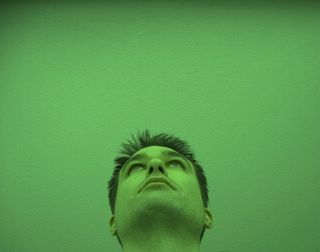
How is it that my greatest clarity comes when I wake up in the middle of the night and know with a certainty that I am wasting my life? All of those fire drills at the office, demand management and value proposition; work for work’s sake with outcomes that will be forgotten in a year’s time.
I should be writing, and writing seriously; not these rambling and self indulgent journal entires. Something of substance. Something of the lives of others, with very little having to do with me.
Even my dreams last night played out more like a screenplay. I was not me: I was a South American boy running from a dictator, el Nino. I spoke Spanish. I don’t know Spanish; I was a D+ French student. This led to other, more involved dreams themed after a Game of Thrones. I was the overthrown king being bandied about by Jaimie Lannister, though he was also half faerie king. Translucent wings protruding from his back, his good looks sinister and taunting, constantly surrounded by a gaggle of beautiful..what’s the word? Those women of the court?
Wow, my brain is nearly dead. I struggle to find even the simplest words. I depend on Google to find the words that, in the past, my mind could serve up after a little effort. Courtesans. But back to the dream: I was injured, so I could not fight Lannister. Not yet, and while my strength grew I had to feign helplessness, but his insults angered me. I could wait no longer to rise against him, so I dug deep within my psyche to tap reserves of power deep within, the true source of life’s power! And then I was in a shopping mall, trying to find the right department store. Such is dreams.
So what if I can’t find the words like I once did? So what if I can’t escape myself anymore? None of that matters; you can write no matter what state of mind you are in. It doesn’t have to be good; it just needs to be true.
I’m reading John Irving again. I loved Widow for One Year, and now I am trying The Hotel New Hampshire. What a great storyteller. He calls up details so distinct and concrete that you swear he must be dictating from real-life. Nobody could make this stuff up.
I read a short story in the New Yorker, a contest winner, and saw how they rewarded the story that did not try to sound literary. The story was told plainly and with the true first person narrative of somebody who is not admirable. Quite the opposite; the character was deeply flawed but finds his way in the end. It felt good to see recognition given to a work humble on the surface but complex at its core. It’s not about the veneer.
It’s not my preference though, really. I have to admit, I prefer beautiful prose that transforms the reality around me, and if I have to look at the common, I need to see it through a distorted lens. I like to break reality, be honest; “break on through to the other side.” Dear god, I am merely a minion of the dead Morrison, a copycat of his influences; Artaud and Rimbaud. Does that make me a grainy copy of a copy of a copy? I like to plumb the depths of the psyche and find a common subterranean river that feeds us all. Leap alongside Jung into the deep pool below. And then I find myself in the shopping mall, trying to find Macy’s to buy a new pair of flat front chinos for work.
So what would I write about, when I wake in the middle of the night and realize in a panic that it is time to get going? Two stories come to mind: “The Tea House” and “Stuttersville.” Do I have the guts to dive into the stories I have held on reserve for when I have honed my skills?
Sullen’s Fish House. It is a phrase stuck in my head this morning, a story title. What is it to me? A menacing, unknown place on a frozen lake, lit up with a tangle of christmas lights. Sounds from within of drunks cheering and music and drunks. At times quite, too quiet. No windows. It’s less about the fish house and more about the bright, warm point out on the expanse of ice, drawing in these two boys, brothers I think. Two brothers being drawn in by drink, drugs, and something more sinister in Sullen. Who is Sullen, and why in the end do I sense that the real threat is not this bad apple of the town, but his mother?
I can’t think about this now, I have to figure out why I was double charged on my last cable bill, email our insurance agent to consolidate home, auto, and life. I’m distracted by sounds of my mother-in-law in the kitchen, making breakfast with the help of my wife. Who’s kidding who; she’s hovering to sample the bacon.
Wind rattling the trees on shores of the frozen lake. Swirls of snow coming alive like dust devils on thin ice.
My brain is tired. I wonder if that bacon is done yet.
Saturday, November 09, 2013


Saturday, November 02, 2013
Beneath the Stairs
With these words I clear out a little space for myself, like clearing out a cubby hole in the pile of empty suitcases under the stairs. In this little space, I play make believe. I prop up the suitcases by the entrance to form a wall, a flashlight, my pillow and blanket and books. The girl from across the street comes over to play, white sandals on her feet. We sit on our knees and quietly watch each other, sniffle, rub our eyes, and she tucks a strand of hair behind her ear before laying back on a balled up blanket that I had dragged into my cubby hole earlier. She pretends to sleep while I stare at her. In the furthest reaches behind the stars, in the dark lower steps, lights sparkle from a string of Christmas lights I’d found. Their warm glow illuminates something that I hadn’t noticed before the little girl had showed up. There’s a door. I can just barely squeeze through the opening and crawl along and up a tunnel, until I surface from underground to a morning meadow. Nestled in an island of trees stands a farmhouse and a slowly turning windmill. In the farm yard, white bedsheets are hung out to dry in the sun and breeze, only they undulate too slowly, as though I am watching a film where the frame speed isn’t quite right. That’s it exactly, things aren’t quite right, but who’s to say that it is not perfectly normal on this side of the stairs?
I explore this place for a while, and when I crawl back through the stairs the girl is gone, and my father is yanking suitcases out from beneath the stairs, dragging me out by my collar and scolding me to get out of there, and where is my head. Where is my head, in that place beneath the stairs.
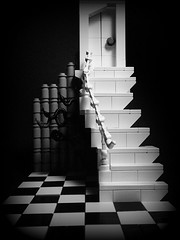
I explore this place for a while, and when I crawl back through the stairs the girl is gone, and my father is yanking suitcases out from beneath the stairs, dragging me out by my collar and scolding me to get out of there, and where is my head. Where is my head, in that place beneath the stairs.
Friday, October 18, 2013
The Winding Woods
It isn’t always straight forward, the way we find our way through the woods. It isn’t always by light of morning but sometimes by light of moon, when the owl’s hoot and silent wingspan fills dark spaces between the trees, and when eyes aglow follow our trail, quiet, waiting.
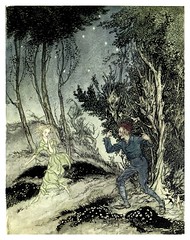
It isn’t always plain to see, the town that comes beyond the hill. The ramshackle huts with smoke drifting skyward, or the laundry drying on the dead brambles, or the twisted sheen of the madmen gathered near the well.
It isn’t always what we thought it would be, this love of the girl we travel to see, this milkmaid or seamstress or nursemaid’s scullion. At times she hides a blush behind her hand, while others she screams with pretty little fists that beat your chest, hollowed and tight like a drum. Then the stolen moments, fleeting for the memory to cup, and ugly moments that will never end and neither drink nor sleep will see it fade, and once she is gone there are all the moments that never were, but that we play upon and mould with hands now empty. Linger upon days that could have been, if we had found our way by different paths, for the woods know best, in their weathered bark and aged span of limbs, which is the path for me that day, and the next, and the next.
Tuesday, October 08, 2013
Dreams Doomed Never to Come to Pass
From the Writer’s Block blog on the Loft: "Entangled in mutual dependence, their breath clogged with the unique vapors of dreams on their downside or possibly doomed never to come to pass, these characters wield cudgels of bitter years and lacerating longing every time they open their mouths to speak to one another."
This made me think about my own life, and the degree to which my frustration and anxiety is linked to the awareness of a dream doomed never to come to pass. What is my dream? No matter how many years pass, I always come back to the same answer — “writing.”
Why not hold up the pursuit of love, living my days in happiness, landing a career both meaningful and fulfilling? Why cling to a childish dream that requires an activity that I am always avoiding? Those other dreams are as abstract as air - Love, Happiness, Meaning. Maybe their incarnation is best encapsulated in this simple act of words.
Does writing bring me love, happiness, and meaning? Truth is, writing is anxiety, fear, frustration, and hard labor. Writing beats my head bloody. Writing has become for me a dark cloud on the horizon from which I cower. I have placed writing at un unattainable height, but it has no business being up there. I am fully aware that I have fallen into the same rut that all would-be writers encounter, but knowing I am in a hole does not grant me a way out.
In that same Loft blog, the writer shared this tip about what makes for great writing: "One of the criteria of great writing is that it inevitably confronts truth. It represents an act of courage on the part of the writer, the sort of boldness that by necessity we spend most of our waking hours maneuvering around in order to present a unified and reasonably placid face to the world. It’s telling that O’Neill wished for his great play to be hidden from the world for so long: There are truths that a writer wishes to keep from the public, or from one’s family and friends. Some truths are so powerful that the anonymity of decades might seem the only proper protection."
This made me think about my own life, and the degree to which my frustration and anxiety is linked to the awareness of a dream doomed never to come to pass. What is my dream? No matter how many years pass, I always come back to the same answer — “writing.”
Why not hold up the pursuit of love, living my days in happiness, landing a career both meaningful and fulfilling? Why cling to a childish dream that requires an activity that I am always avoiding? Those other dreams are as abstract as air - Love, Happiness, Meaning. Maybe their incarnation is best encapsulated in this simple act of words.
Does writing bring me love, happiness, and meaning? Truth is, writing is anxiety, fear, frustration, and hard labor. Writing beats my head bloody. Writing has become for me a dark cloud on the horizon from which I cower. I have placed writing at un unattainable height, but it has no business being up there. I am fully aware that I have fallen into the same rut that all would-be writers encounter, but knowing I am in a hole does not grant me a way out.
In that same Loft blog, the writer shared this tip about what makes for great writing: "One of the criteria of great writing is that it inevitably confronts truth. It represents an act of courage on the part of the writer, the sort of boldness that by necessity we spend most of our waking hours maneuvering around in order to present a unified and reasonably placid face to the world. It’s telling that O’Neill wished for his great play to be hidden from the world for so long: There are truths that a writer wishes to keep from the public, or from one’s family and friends. Some truths are so powerful that the anonymity of decades might seem the only proper protection."
Tuesday, September 24, 2013
Captor in the Field
How like a writer is this killer? Or how like a killer is our writer, there is little difference. He stretches his limbs spread eagle over the soil and peat moss in the moonlight, stretches his neck to look at the stars swirling about the celestial dome like a whirlpool sucking him in. He sheds his skin and gleams anew for all the stars to see. Cryptic syllabile, metered out in iambic pentecost, grew like pyroglyphic crustaceans upon his peculiar tabular rosa.
He is pulled to his feet by the moon, and goes in search of a reader.
How like a reader is this victim, or how like a victim is our reader? She regained consciousness to find herself being dragged across a recently harvested cornfield. The severed stalks poked her shoulders and scraped across her back. There it is again, that hideous moon bearing down on me, she thought. Wicked leer of Moon Man. The grip on her wrist was strong, a calloused hand with hairy knuckles, thick wrist with a thick silver bracelet. A medical bracelet? His boots crunched over the dirt, crushed dried husks fallen from the plants. It never occurred to her to wonder where she was being dragged. Does a rabbit grasped by its hind legs wonder where its captor is leading it? It simply hangs in the grip of its captor, watching the world sway as it rocks like a pendulum. It might be considered Mercy, the way the mind distances itself from the physical predicament of the body when it knows it will soon be separated from its longtime counterpart.
Words come out of the dark, lighting his way like a jolt of electricity through a conductor. Are you beneath there still, he wonders, under the skin, trying to resurface after a year’s long abstinence? His fingers grow stronger as the morning comes, and the keys heated beneath their constant pounding. There’s light in the Eastern sky, a bruised backdrop for his latest work
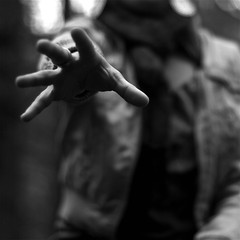
He is pulled to his feet by the moon, and goes in search of a reader.
How like a reader is this victim, or how like a victim is our reader? She regained consciousness to find herself being dragged across a recently harvested cornfield. The severed stalks poked her shoulders and scraped across her back. There it is again, that hideous moon bearing down on me, she thought. Wicked leer of Moon Man. The grip on her wrist was strong, a calloused hand with hairy knuckles, thick wrist with a thick silver bracelet. A medical bracelet? His boots crunched over the dirt, crushed dried husks fallen from the plants. It never occurred to her to wonder where she was being dragged. Does a rabbit grasped by its hind legs wonder where its captor is leading it? It simply hangs in the grip of its captor, watching the world sway as it rocks like a pendulum. It might be considered Mercy, the way the mind distances itself from the physical predicament of the body when it knows it will soon be separated from its longtime counterpart.
Words come out of the dark, lighting his way like a jolt of electricity through a conductor. Are you beneath there still, he wonders, under the skin, trying to resurface after a year’s long abstinence? His fingers grow stronger as the morning comes, and the keys heated beneath their constant pounding. There’s light in the Eastern sky, a bruised backdrop for his latest work
Sunday, August 18, 2013
Poet in the Corpse Garden
Tropical birds screech from behind a dense tree canopy while I sit alone on the veranda in a wicker love seat. A ceiling fan stirs the humid, fragrant air. Squirrels scavenge in the thicket, sorting leaves, patting down nuts with a dusting of dirt. I sip brandy and work on the day’s poem while my love withers away in a brass bed upstairs. The hospice nurse sits on a dining room chair beside the bed, leg crossed over knee and a murder mystery novel pried open in a single hand. Her leg bounces, like the heartbeat in the bed beside her, irregular and fading. Don’t stop.
Her parents are coming tomorrow to talk me out of custody of our little girl. I think I will give her up. Not because she reminds me of her mother, which she doesn’t, but because I want to increase my pain to match my wife’s. I want to go through what she’s going through, so that she is not alone. Or is it so that I am not alone? Of the two of us, I was always the coward. Like now, like my poems, like this fear of the tropical birds and squirrels scuttling in the brush.
Branches form bridges in the blue sky, and snifters full of brandy hang from the trees in the hidden grove. I scatter her ashes in air, gentle dance of dust through rays of sunlight. Death is all around; I count corpses down in the copse, along with all of my broken art strewn about. Sculptures with broken limbs. Portraits rendered and torn. Her dust has not even settled over the thicket before sprites emerge from the green curtain, supple limbs and untouched faces of all the pretty girls I knew before. May I come inside, I ask? Just a moment, you say? Yes, a moment is all it takes, and a moment is all we have left.
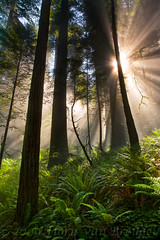
Her parents are coming tomorrow to talk me out of custody of our little girl. I think I will give her up. Not because she reminds me of her mother, which she doesn’t, but because I want to increase my pain to match my wife’s. I want to go through what she’s going through, so that she is not alone. Or is it so that I am not alone? Of the two of us, I was always the coward. Like now, like my poems, like this fear of the tropical birds and squirrels scuttling in the brush.
Branches form bridges in the blue sky, and snifters full of brandy hang from the trees in the hidden grove. I scatter her ashes in air, gentle dance of dust through rays of sunlight. Death is all around; I count corpses down in the copse, along with all of my broken art strewn about. Sculptures with broken limbs. Portraits rendered and torn. Her dust has not even settled over the thicket before sprites emerge from the green curtain, supple limbs and untouched faces of all the pretty girls I knew before. May I come inside, I ask? Just a moment, you say? Yes, a moment is all it takes, and a moment is all we have left.
Sunday, August 04, 2013
Incubator Boy
It was what he wanted, in the end. He rode the Greyhound bus out of town to North Dakota somewhere. There was not much ahead of him, but more than enough behind him. Little boy blue, nestled in his incubator, curated by the nurses to a thing of beauty more fragile than a faberge egg. Countryside flashing past, with a steady image of his disconnected face on a palette of green. His girlfriend was back there somewhere. He couldn’t see her face. Only a smeared image now that it has begun to rain.
The bus broke down near Fargo. He stood on the side of the rode holding up an old lady that reminded him of his grandmother. Too hot in the bus. The highway shimmers and fades in the heat vapor rising off the tar. Fiberglass shattered around twisted metal frames. Covered bodies in the passing lane. Wait for the EMTs and troopers to clean up the mess, the tow truck to haul away the wreckage.
He dreamt he would have had a motorcycle by now, and not have to schlep it on an interstate bus with these people. He dreamt he would have had a lot of things by now; a place of his own, a dog, a kid or— no, no kid. Children had never been in the picture. He was too much of a kid himself, still ate Frosted Flakes for breakfast, still watched reruns of Gilligan’s Island. He had a hard enough time figuring out how to keep himself alive.
The bus pulls away from the shoulder again, the overhead air nozzle feeding a lifeline of air to his lungs. Expand, contract, expand, contract. North Dakota comes but it doesn’t take long enough, not enough distance measured in mile markers. It’s not what he wanted, in the end. Maybe he wanted mountains this stretch of his life, land masses to block part of the blue, blue sky filling the vanishing point on the horizon. Maybe he wanted straight roads replaced by switchbacks, steep descents and faulty brakes, emergency escape ramps for runaway trucks.

The bus broke down near Fargo. He stood on the side of the rode holding up an old lady that reminded him of his grandmother. Too hot in the bus. The highway shimmers and fades in the heat vapor rising off the tar. Fiberglass shattered around twisted metal frames. Covered bodies in the passing lane. Wait for the EMTs and troopers to clean up the mess, the tow truck to haul away the wreckage.
He dreamt he would have had a motorcycle by now, and not have to schlep it on an interstate bus with these people. He dreamt he would have had a lot of things by now; a place of his own, a dog, a kid or— no, no kid. Children had never been in the picture. He was too much of a kid himself, still ate Frosted Flakes for breakfast, still watched reruns of Gilligan’s Island. He had a hard enough time figuring out how to keep himself alive.
The bus pulls away from the shoulder again, the overhead air nozzle feeding a lifeline of air to his lungs. Expand, contract, expand, contract. North Dakota comes but it doesn’t take long enough, not enough distance measured in mile markers. It’s not what he wanted, in the end. Maybe he wanted mountains this stretch of his life, land masses to block part of the blue, blue sky filling the vanishing point on the horizon. Maybe he wanted straight roads replaced by switchbacks, steep descents and faulty brakes, emergency escape ramps for runaway trucks.
Thursday, July 25, 2013
Skull Vacancies
A human skull sits on a corner of my desk. My uncle left it to me in his will. Not his skull, but one that he had come across in his professorial days bouncing from college to college between improprieties. Why did he leave it to me? Just to make me wonder, I suppose. He liked to pose unanswerable questions to me, riddles that he would drop into my lap at family get togethers as he made his way to the food table for a second helping of mom’s potato salad.
Now, the skull spectates on my morning ritual of writing. What a heroic waste of time, it says from the vacancies that were once its eyes. The skull serves as a reminder of how quickly all of me, except my bones, will drain into the soil and transition to something else. What else? Why do I come here each morning to ? Is this merely a time killer? Do I really think I will rediscover my voice after all these years? I need to leave out crumbs of bread to attract the little bird. Or maybe more drastic action is required, a lighted torch and raised pitchfork to flush him from the ruins.
An angry mob gathers at the foot of the the hill where he is holed up, but they lack the courage to drive him from his haven. They cower in his shadow beneath the august moon, in a light that leaves blood the color of oil. He curses the stars and scribbles words into a wrinkled and muddied notebook. Children run wailing from him whenever they stumble upon his huddled form, reciting the words with a voice like a raven caw.
Whatever was meant was left behind, whatever was given was taken, whatever was foul was left to fester. I did not want it any more, could not take it any more than I could leave it, could not make do with what was left, could not eclipse what demanded to be seen. And now when the pressure lets up, nothing comes out. There is a requirement for conflict, a necessity for nihilism, a preternatural lust for the proper and prim. I did not ask for these misfits but bore them in spite; I much more preferred exposed fields and ramshackle huts sinking into the fallows. Is that a word, is that a place, is that a face familiar in the lineup of my suspects? Yes sir, right there; that word accosted me on the night of the 17th, in the cool light of day, may the titmouse be my witness.
He is grinning at me now, that skull; he is having a good ol’ time.
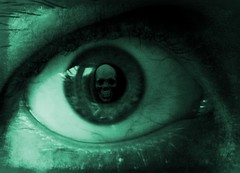
Now, the skull spectates on my morning ritual of writing. What a heroic waste of time, it says from the vacancies that were once its eyes. The skull serves as a reminder of how quickly all of me, except my bones, will drain into the soil and transition to something else. What else? Why do I come here each morning to ? Is this merely a time killer? Do I really think I will rediscover my voice after all these years? I need to leave out crumbs of bread to attract the little bird. Or maybe more drastic action is required, a lighted torch and raised pitchfork to flush him from the ruins.
An angry mob gathers at the foot of the the hill where he is holed up, but they lack the courage to drive him from his haven. They cower in his shadow beneath the august moon, in a light that leaves blood the color of oil. He curses the stars and scribbles words into a wrinkled and muddied notebook. Children run wailing from him whenever they stumble upon his huddled form, reciting the words with a voice like a raven caw.
Whatever was meant was left behind, whatever was given was taken, whatever was foul was left to fester. I did not want it any more, could not take it any more than I could leave it, could not make do with what was left, could not eclipse what demanded to be seen. And now when the pressure lets up, nothing comes out. There is a requirement for conflict, a necessity for nihilism, a preternatural lust for the proper and prim. I did not ask for these misfits but bore them in spite; I much more preferred exposed fields and ramshackle huts sinking into the fallows. Is that a word, is that a place, is that a face familiar in the lineup of my suspects? Yes sir, right there; that word accosted me on the night of the 17th, in the cool light of day, may the titmouse be my witness.
He is grinning at me now, that skull; he is having a good ol’ time.
Friday, July 12, 2013
Shock that Draws
These images from the dark are like piercings of a needle beneath my fingernails. It is an addictive pain, a shock that draws one in, that exposes a whole other animalistic level to the self and to the dark. As a teenager, I crossed town on foot to the railroad tracks and the devil house behind the trees to seek the mystery of the unknown. Now the dark is much closer to home, small but necessary, an ebb and flow. The dichotomy of micrology versus macrology is merely due to the fact that each stares at the other through a different side of the lens.
I want to stop. I want to drop. I need to roll. Put the fire out. Crawl baby, crawl on your hands and knees. Sprawl to the needs. Drawl with the feeds coming in across this satellite haze.
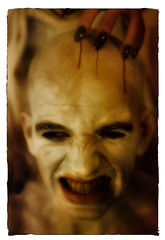
I want to stop. I want to drop. I need to roll. Put the fire out. Crawl baby, crawl on your hands and knees. Sprawl to the needs. Drawl with the feeds coming in across this satellite haze.
Tuesday, July 09, 2013
Sullen's Fish House
Northern lights flash across the sky like dust blowing over a car windshield. This place is no desert, though. Here we got endless snow and ice cruel as any desert could be, and the people who live here are as cruel as our winters. What pleasures to we enjoy as we wait for it to end? Sit on a frozen lake in a plywood box, staring into a dark hole, waiting for something to bite?
Sullen’s fish house is something else though, about three times the size of your average fish house, strung up with Christmas lights like a carnival drawing us in from the dark. Me and my brother Jay go out there to thaw out. Drink some Jim Beam and spark a bowl. Other bright shiny things draw us there, too; make us warm for a while at least. Then when they get cold we drop them down through the hole to come bobbing up again sometime in the Spring. Spring will never come though, we tell ourselves. It still hasn’t.
Mom don’t like us hanging out there. When we come home, me and my brother come through the back door and let in a drift of snow behind us. I stamp my boots off just inside the door, a pink slush of blood and snow. Jay come in behind me, slams shut the door and wipes his nose on his sleeve.
Mom stoops over by the wood stove, shoving in birch logs. “What you boys been up to? Sandy lake still frozen over?”
She knows it would be, but asks anyway.
“Yeah. Sullen’s fish house is all lit up. Nice. Like Christmas.”
“Sullen din’t light it up like that for Christmas, be damn sure of that. I don’t want you goin’ there.”
Sullen has been a buddy of mine since the third grade. Mom don’t like him much. Much of the town don’t like him much, nor his folks neither. The nice half of the town, that is. Then there are those like Jay and I. Something about Sullen makes you want to do what he does, look like he looks, talk the same. His whole family’s kind of like that. His folks’ place was the biggest in town once, but it’s falling apart now like some ruin. Last summer we’d go there to smash stuff in, with Sullen right there beside us, breaking up his own shit.
So I got friends like Sullen, right; I can deal with people like that. Dangerous people, some of them. Funny thing is, he isn’t the one to be scared of. I’d learn over the next several weeks what brought Sullen’s family down from the top.
“You got to watch what those Sullens do.” mom said. I’d learn that the ice and darkness didn’t keep to the lake, but spread from a place closer to hearth and home. ”Got to keep them in line,” she finished, almost to herself.
We knew who to be scared of, the one that called all of the shots and decided when winter and spring would come, when it was time for the ice to thaw, when Sullen’s Fish House would finally go dark and break through the thin ice, drift down through the dark and settle in the sediment.
Mom fed the last log into fire and slammed the stove door shut. “That should be just about enough, now. Spring’s coming.”
Sullen’s fish house is something else though, about three times the size of your average fish house, strung up with Christmas lights like a carnival drawing us in from the dark. Me and my brother Jay go out there to thaw out. Drink some Jim Beam and spark a bowl. Other bright shiny things draw us there, too; make us warm for a while at least. Then when they get cold we drop them down through the hole to come bobbing up again sometime in the Spring. Spring will never come though, we tell ourselves. It still hasn’t.
Mom don’t like us hanging out there. When we come home, me and my brother come through the back door and let in a drift of snow behind us. I stamp my boots off just inside the door, a pink slush of blood and snow. Jay come in behind me, slams shut the door and wipes his nose on his sleeve.
Mom stoops over by the wood stove, shoving in birch logs. “What you boys been up to? Sandy lake still frozen over?”
She knows it would be, but asks anyway.
“Yeah. Sullen’s fish house is all lit up. Nice. Like Christmas.”
“Sullen din’t light it up like that for Christmas, be damn sure of that. I don’t want you goin’ there.”
Sullen has been a buddy of mine since the third grade. Mom don’t like him much. Much of the town don’t like him much, nor his folks neither. The nice half of the town, that is. Then there are those like Jay and I. Something about Sullen makes you want to do what he does, look like he looks, talk the same. His whole family’s kind of like that. His folks’ place was the biggest in town once, but it’s falling apart now like some ruin. Last summer we’d go there to smash stuff in, with Sullen right there beside us, breaking up his own shit.
So I got friends like Sullen, right; I can deal with people like that. Dangerous people, some of them. Funny thing is, he isn’t the one to be scared of. I’d learn over the next several weeks what brought Sullen’s family down from the top.
“You got to watch what those Sullens do.” mom said. I’d learn that the ice and darkness didn’t keep to the lake, but spread from a place closer to hearth and home. ”Got to keep them in line,” she finished, almost to herself.
We knew who to be scared of, the one that called all of the shots and decided when winter and spring would come, when it was time for the ice to thaw, when Sullen’s Fish House would finally go dark and break through the thin ice, drift down through the dark and settle in the sediment.
Mom fed the last log into fire and slammed the stove door shut. “That should be just about enough, now. Spring’s coming.”
Saturday, March 30, 2013
Minnesota Winter of our Discontent
I wake up now in the squall of night. Nothing stirs outside but the wind in the bows and the rush of air through barren limbs. Sounds like water rushing in to flood our streets, to pool at our back doors. One could only wish it were water that would offer some hope of draining away in a few days; anything other than this opaque northern night. It’s what makes us Minnesotan; these long winter months in a land that others cringe to see when their plane descends beneath the layer of clouds that hang over us. If they were only nice clouds, puffy like cotton; but no, they are like the dirty banks of snow, sand, and salt that line our streets. They are dirty like the fast food bags and tires and newspapers that are exposed as the snow recedes in April.
But this very trauma that is our winter makes artists of us all. What else do we have to do with our mornings and evenings than to introspect, to read a book or go down to the basement with guitar or paints? Who would want to wile aways the hours at the park or beach in a forsaken land; unless you are one of those people who skis, sleds, or skates - but those are the few of us lucky enough to have sustained a head injury during our youth, sliding into a tree trunk or having your skates sweep out from under you to crack your skull against the ice. Nobody of healthy mind would go out there. But we call it home. Minnesota nice. The land of 10,000 lakes filled with Walleye; fitting that our state fish is milky-eyed and can only see the dim depths of the deepest lake holes. Fitting that our Loon laughs like a mad hatter in those fleeting, goading days of summer.
Thursday, March 21, 2013


Sunday, March 10, 2013
Bramble and Briar
All I had really wanted to do was plant a quiet little garden in the back corner of my yard, but once I’d wandered into the wild bramble and briar, the tangled buckthorn and thistle, I felt the hairs on my neck tingle as I caught a faint whispering on the breeze. I felt as though eyes were watching me from behind every leaf, but when I’d turn to catch whoever it was, the undergrowth would bounce back into place and the sound of scurrying fell back to quiet.
I’d tried my best to ignore it, but deeply shaken, I retired for the afternoon to my den, which afforded a view of the unkempt back corner of my lot, and poured myself a brandy. Then a scotch. Then some whiskey. By the time night fell, it was either the drink or the dark, but I could distinctly see tiny little lights dancing about the brambles, and by midnight, eyes grown heavy and now on my hands and knees at the windowsill, I perceived little figures marching out of the undergrowth, across the lawns towards my house.
Then came a rap upon the door. I jumped, so startled that I knocked over a plant beside me. I opened the door. Nothing there. Closed the door. I retired to my bed, where I thought I heard raucous voices outside, but fell asleep in the stupor of the tired and drunk.
Each night thereafter we repeated the proceedings of the night before; Me, drinking desperately and rubbing my blurry eyes while on hands and knees at the window; and Them, tiny illuminated creatures, faun and faerie alike, marching out from the bramble and briar in a herald of singing and music. They were a rowdy, bawdy bunch to be sure, hacking down my newly planted posies, peeing in the bird bath, rutting in the limbs of the crab apple tree. They were more ethereal than corporeal, made more of firefly light than that of our mortal clay. The faun — half man and half goat with their ears hanging low and chin beards foamed with beer — brayed at the neighbors’ dogs to egg them on. The trooping faeries, though made of finer features and higher born, were equally full of mischief and revelry.
They had come finally for me, after all these years, to reclaim their changeling left in the bed of a kidnapped child. My parents, now dead and gone, had always suspect I was not theirs, but could they have guessed who I was? Could any of us have guessed that one day this bastard child of the Faerie King of Bramble and Briar would be called back home to his father’s court? I doubted that, as I finally answered the door on that last night and followed the hidden people across the lawn, with each step growing smaller, each step peeling away the dried out husk of my flesh, exposing the glowing light inside my chest, the tiny light to pierce the night.
![Curse Of The Demented Forest Faerie #2 [EXPLORED]](http://farm8.staticflickr.com/7160/6474632521_aa0aa43fc8_m.jpg)
I’d tried my best to ignore it, but deeply shaken, I retired for the afternoon to my den, which afforded a view of the unkempt back corner of my lot, and poured myself a brandy. Then a scotch. Then some whiskey. By the time night fell, it was either the drink or the dark, but I could distinctly see tiny little lights dancing about the brambles, and by midnight, eyes grown heavy and now on my hands and knees at the windowsill, I perceived little figures marching out of the undergrowth, across the lawns towards my house.
Then came a rap upon the door. I jumped, so startled that I knocked over a plant beside me. I opened the door. Nothing there. Closed the door. I retired to my bed, where I thought I heard raucous voices outside, but fell asleep in the stupor of the tired and drunk.
Each night thereafter we repeated the proceedings of the night before; Me, drinking desperately and rubbing my blurry eyes while on hands and knees at the window; and Them, tiny illuminated creatures, faun and faerie alike, marching out from the bramble and briar in a herald of singing and music. They were a rowdy, bawdy bunch to be sure, hacking down my newly planted posies, peeing in the bird bath, rutting in the limbs of the crab apple tree. They were more ethereal than corporeal, made more of firefly light than that of our mortal clay. The faun — half man and half goat with their ears hanging low and chin beards foamed with beer — brayed at the neighbors’ dogs to egg them on. The trooping faeries, though made of finer features and higher born, were equally full of mischief and revelry.
They had come finally for me, after all these years, to reclaim their changeling left in the bed of a kidnapped child. My parents, now dead and gone, had always suspect I was not theirs, but could they have guessed who I was? Could any of us have guessed that one day this bastard child of the Faerie King of Bramble and Briar would be called back home to his father’s court? I doubted that, as I finally answered the door on that last night and followed the hidden people across the lawn, with each step growing smaller, each step peeling away the dried out husk of my flesh, exposing the glowing light inside my chest, the tiny light to pierce the night.
Wednesday, February 27, 2013
Morning Siren
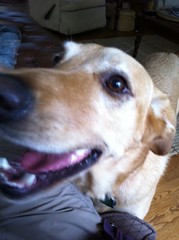
I wake up in Siren to a cold morning, window open, Meredith and I entwined like burning twigs beneath a comforter the size of a slab of whale blubber. Now with a glass of orange juice while Mary Anne tinkers in the kitchen to prepare breakfast. Pancakes and bacon, I think. Maggie comes out of the laundry room with nails clicking on hardwood and tail beating the air, a smile curled like a snarl on her lips. She likes to wrestle in the morning, and bite at my hands with the soft mouth of a bitch handling her pups. In my chest, I feel my heart expand with the feel of soft dog fur under my hands, her doe eyes and ears curled back against her head like a wet seal. It is good to love and be loved.
Sunday, February 17, 2013
The Grand Tour: Conclusion
The Aunt is a sister of The Uncle, not a wife. She was an amateur artist whose life and art was augmented by schizophrenia. Her art consisted entirely of crayon stylings on mail envelopes and postcards. She was middle-aged and…I can’t remember her face. Odd. Can’t remember her body or her eyes, though I held both that night. When tea was served she gracefully slipped under the table, where we joined her for a cup and a biscuit under the table cloth, while she told us about her date with a clown earlier in the day. I gathered that the clown was not metaphorical but quite real, having just returned from a child’s birthday party and still in costume. They had a picnic in a park. She spoke English as best she could, for my benefit; “There we were, laying on our plates…”
“You were lying on your plates,” asked The Uncle, “and what fine gentleman was eating you?”
She either did not catch his meaning ignored him, “…and then he asked me if I wanted to taste his Bobo? What’s his Bobo?” she asked, turning to me.
I looked to Odlef for rescue, but he only shrugged and drained his cup of tea. We crawled out from the table and moved on to wine, something from Hungary called Bulls Blood. Before opening the next bottle, The Uncle took the empty bottle by the stem and tossed it through an open window, where it cartwheeled twenty feet down and kerplunked into the mote. “Back in the day of our forebears, they always threw their empties into the mote. As a preservationist, it is my duty to uphold their customs in the highest regard. Do as they did, I say.” He laugh was more of a giggle, a bead of wine clinging to his curled mustache.
The Aunt brought our dinner, a half dozen smoked eel in butcher wrap. The Uncle smoked at the table. Odlef was a blond blur at the edge of my vision, laughing and alternating from Dutch to English, though it didn’t matter because I could understand neither. Talk led to my writing aspirations, the state of literature today, the need for a new commune of writers like the Lost Generation. Who would be our Gertrude? Was Odlef our Fitz drinking away his talent? I was none of the above, but they saw in me what they wished. When I talked about Morrison and wanting to be a visionary, and about Artaud and Rimbaud and how writing could be inspired by the unsettled mind, I forgot to whom I was talking. The Aunt cautioned me about romanticizing mental disorder. Was it worth the price, in the end? As if in explanation, she escorted me from the dinner table to the makeshift studio The Uncle had set aside for her in one of his many rooms. She opened the door to a simple room; four walls, a table, a chair, but plastered across the walls and ceiling were hundreds of envelopes, each consumed by brightly colored flames, curling at the edges, wrinkled, pressed flat again. On the floor they gathered like so many fallen leaves. Each burned and yet did not expire; they were only crayon flames, I realized, and the crayons that ignited them were scattered across the table, some snapped in half like broken fingers or rubbed down to the nubs. I looked more closely at the envelopes and found that not all were only made of colors following the folds of the envelope, but some also held stick-drawings of bicycles and trains and boats and planes, suns and flowers and sons and daughters.
It wasn’t good. I didn’t get it. I felt deflated. I wanted her to be brilliant, but she didn’t care to be, knew she was not, aspired to be nothing but who she was. At twenty I didn’t appreciate that. At forty I wonder if you grow up or grow in. At sixty I hope to understand if the evidence of that growth, the product of all my exploration, like her colored envelopes, is meant more for myself or others. Shit, who cares.
We went back upstairs and drank and smoked, stacked dishes and tried to fish empty bottles from the mote. I fell asleep on the sofa with the aunt. Awoke in a tangle of limbs and clothes in ray of blinding sun.
It was a morning of hangovers and shame, putrid cigarettes and cotton mouth, bad smells lingering in the rooms from the night before. While The Uncle brewed a pot of strong black coffee, I drew away from the group and slipped out the door to the castle grounds still wet with dew. I walked down winding cobbled paths, through a maze of wood neatly stacked in cords, through the shade of the trees spared from emperor’s ax, and by the time I made it through the maze to the mausoleum, I had in my mind the beginnings of what would be my first novel.
Odlef and I stuffed our backpacks to catch the last train home. The Aunt presented me with her latest envelope creation, which she must have colored over her morning coffee. Was it something in the image she drew in childlike crayon, or was it in the recognition of her chosen medium — an envelope? Whichever caused these chemicals to collide, I had received her message carried over a great distance, not only the very real ocean that would soon divide me from my grand tour of Europe, but also a message that bridged the space between her art and the irrational world in which she had learned to live, and with which I was only now coming to terms.

“You were lying on your plates,” asked The Uncle, “and what fine gentleman was eating you?”
She either did not catch his meaning ignored him, “…and then he asked me if I wanted to taste his Bobo? What’s his Bobo?” she asked, turning to me.
I looked to Odlef for rescue, but he only shrugged and drained his cup of tea. We crawled out from the table and moved on to wine, something from Hungary called Bulls Blood. Before opening the next bottle, The Uncle took the empty bottle by the stem and tossed it through an open window, where it cartwheeled twenty feet down and kerplunked into the mote. “Back in the day of our forebears, they always threw their empties into the mote. As a preservationist, it is my duty to uphold their customs in the highest regard. Do as they did, I say.” He laugh was more of a giggle, a bead of wine clinging to his curled mustache.
The Aunt brought our dinner, a half dozen smoked eel in butcher wrap. The Uncle smoked at the table. Odlef was a blond blur at the edge of my vision, laughing and alternating from Dutch to English, though it didn’t matter because I could understand neither. Talk led to my writing aspirations, the state of literature today, the need for a new commune of writers like the Lost Generation. Who would be our Gertrude? Was Odlef our Fitz drinking away his talent? I was none of the above, but they saw in me what they wished. When I talked about Morrison and wanting to be a visionary, and about Artaud and Rimbaud and how writing could be inspired by the unsettled mind, I forgot to whom I was talking. The Aunt cautioned me about romanticizing mental disorder. Was it worth the price, in the end? As if in explanation, she escorted me from the dinner table to the makeshift studio The Uncle had set aside for her in one of his many rooms. She opened the door to a simple room; four walls, a table, a chair, but plastered across the walls and ceiling were hundreds of envelopes, each consumed by brightly colored flames, curling at the edges, wrinkled, pressed flat again. On the floor they gathered like so many fallen leaves. Each burned and yet did not expire; they were only crayon flames, I realized, and the crayons that ignited them were scattered across the table, some snapped in half like broken fingers or rubbed down to the nubs. I looked more closely at the envelopes and found that not all were only made of colors following the folds of the envelope, but some also held stick-drawings of bicycles and trains and boats and planes, suns and flowers and sons and daughters.
It wasn’t good. I didn’t get it. I felt deflated. I wanted her to be brilliant, but she didn’t care to be, knew she was not, aspired to be nothing but who she was. At twenty I didn’t appreciate that. At forty I wonder if you grow up or grow in. At sixty I hope to understand if the evidence of that growth, the product of all my exploration, like her colored envelopes, is meant more for myself or others. Shit, who cares.
We went back upstairs and drank and smoked, stacked dishes and tried to fish empty bottles from the mote. I fell asleep on the sofa with the aunt. Awoke in a tangle of limbs and clothes in ray of blinding sun.
It was a morning of hangovers and shame, putrid cigarettes and cotton mouth, bad smells lingering in the rooms from the night before. While The Uncle brewed a pot of strong black coffee, I drew away from the group and slipped out the door to the castle grounds still wet with dew. I walked down winding cobbled paths, through a maze of wood neatly stacked in cords, through the shade of the trees spared from emperor’s ax, and by the time I made it through the maze to the mausoleum, I had in my mind the beginnings of what would be my first novel.
Odlef and I stuffed our backpacks to catch the last train home. The Aunt presented me with her latest envelope creation, which she must have colored over her morning coffee. Was it something in the image she drew in childlike crayon, or was it in the recognition of her chosen medium — an envelope? Whichever caused these chemicals to collide, I had received her message carried over a great distance, not only the very real ocean that would soon divide me from my grand tour of Europe, but also a message that bridged the space between her art and the irrational world in which she had learned to live, and with which I was only now coming to terms.
Sunday, February 10, 2013
The Grand Tour pt 9: The Castle
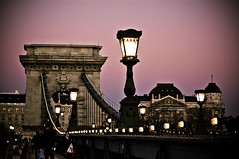
It has been a long time since I was here last. The Grand Tour; so true, but more of a grand tour through the passing year and a half rather than through the memories of all that happened during the backpacking trip of my 20’s. Where have I been? Falling in love, getting married, settling in, and taking a shine to martinis and a movie rather than sweating out words. But even my new bride cannot completely unseat the mistress of my life — writing. She has caused as much trouble over the years, as any mistress would. Competing for attention, luring me away when inspiration heats my blood, filling me with jealous rage when she holds back the words. All of that aside, I’m back; but first, let’s finish the story of the Grand Tour of our poet maudit. Try to keep up with me now, I don’t want to linger too long over the last miles of the trip, the wrecked parapets, the supple village girls selling weaver’s wares, or the food that has gone cold in the underground bistro buried deep in the tunnels of Budapest. There are new stories to tell, so let us be done with it.

What better way to end a European trip than to stay in the servants quarters of a Netherlands’ castle? Odlef’s Uncle served as a preservationist and historian for Huis Houthakker. We called it the castle, though in truth it is a manor house built in the 1500’s, then renovated in the 1800’s with English gardens ringed by a mote, sweeps of gently rolling lawns set against groves of trees, cobbled paths winding through the ruins of arbor and sculptured Goths draped in lichen. A Dutch princess sold the property to an exiled emperor to take as his homestead, or more accurately, his decorative cage with guards of his former country stationed at the gate. The once great man could not sit idle for long, took up an ax and started chopping down tree after tree, splitting the logs, stacking coords of wood in the shape of a maze. He was soon known as The Woodchopper of D_. This went on for a few years until one morning, in mid swing, a bolt of lightning struck him dead and ended his exile, and incidentally, pointed the easy way out from the maze. The emperor’s faithful expats buried him on the castle grounds in a small mausoleum, built upon the very plots he cleared of trees. Rest now, rest.
We walked up the graveled drive, filthy jeans and muddied shoes, backpack slung over one shoulder, finding The Uncle sitting outside the castle gift shop, sipping a cappuccino and leafing through a stack of trade journals. He wore a pale blue linen suit with yellow bow tie, bright green socks and white leather shoes. A cane was propped against the other chair, though later I would observe no perceivable limp. He was mango shaped bordering on a pear. Smiles and handshakes, genuine excitement to hear of our travels and adventures, though his disappointment was palpable at our lack of sexual escapades to share with him: wink wink, no taste of the buttered French croissants, eh? No Italian puttanesca? You’re not holding out on me, eh? No Uncle, afraid not, though there was that Gypsy girl down by the Danube. Immediately, our mango soured - filthy things, filthy - and we moved on to our evening plans: wash up and welcome The Aunt over for dinner.
It will take me more time to linger over the memory of that dinner, and how best to capture the schizo Aunt and her tea party under the table. The mundane was put to bed that night like unwelcome children, while Netherland sprites were set loose to play. If I was an artist, what wonderful art I could put together of that night’s icons: the mote, the stone castle, postal envelopes brightly colored with crayon, smoked eels curling in and out through the windows and portcullis, and empty bottles of wine cart wheeling out of windows and kerplunking into the mote. Yes, it will take some care to capture The Aunt and her dinner, a gentle hand to catch the canary without breaking a wing.
Saturday, May 07, 2011
The Grand Tour pt 8: The Apple and the Sickle
Hills, gray and raining. Deep green forests. Heavy clouds hovered only a few feet above the ground, mingling with the tree tops. Budapest is the land in the clouds, mist glistening on hillside rocks barely glimpsed through the clouds.
On our train ride from Budapest towards the Czech border, a girl and her mother rode in our compartment. The girl’s name was Regina, around sixteen or seventeen years old. Most beautiful girl in the world, sleeping next to me, pummeled in and out sleep on a rocking train.
For the second consecutive night I stayed awake, playing games of pretending to be asleep but with my eyes cracked open so as to peer unobserved on her sleeping face, cherub lips parted slightly to breathe. The mother fights sleep just as diligently, to keep watch over her gosling. I inched closer to the daughter’s side with glacial patience to obtain my objective; letting my arm fall to rest against her bare thigh, as though I simply shifted in my sleep.
In the morning, the sun rises on her face and she wakes up. Vibrant, talking to us about her favorite breeds of dogs and her home and her dreams of one day going to America. She wants to be pen pals and gives us her address. Even her mother warms to us in the morning light and invites us to stay with them should we ever find ourselves in Prague. We get off the train.
Odlef’s grandparents were wealthy and respected in this small Hungarian town. The grandfather was a respected doctor, with a hospital and a boulevard named after him.
The house is a stout stone structure, high ceilings and expansive rooms, with doors that are ten feet high. Thick stone walls keep the rooms cool during the day, and in the early evening we close the shutters over windows barred to keep out theives. Portraits hang on the walls of the family ancestry, from oils to black and white photographs of ancestors, grim and strong. A bishop stands on a balcony in a Transylvanian church. His wife, the tragedy figure, died young from tuberculosis.
There is a garden out back with cherry, nut, and plum trees, squares of flowers, isles in purple bloom, perfumed. The weeds are growing high so Odlef wanders through the garden with a sickle in hand, broad sweeping arcs sculpting the garden, chopping down what does not belong.
Look out back, past the gardens to the property beyond. See the steep roof, stained chimneys and lightning rods? This is their original mansion, taken away by communism. They are in the courts to take it back. They have plans, Odlef’s father and uncles, to reclaim that which was taken and to restore what has decayed. But some things are gone. Russian soldiers had taken the house, shit in the tub, and stolen the silver. Some spoons and knives were found later, scattered across town. But the fine china and teapots now sit in Russian cabinets.
Wednesday, January 19, 2011
The Grand Tour pt 7: Scarecrow Hill
I sit alone on the sidewalk outside of the locked house in Balassagyarmat. Mad dog howling of hunger, smaller dogs yapping a refrain, a bloodied wart seeps on my arm, sticky crimson and dirt. I practice the words in Hungarian, “Odlef K_, gone to get the key,” accompanied with gestures as though I am performing a pantomime. I can see myself through a local’s eyes; a foreign mantra of a long haired bleeding American shaman who drawls his words with a palsied tongue.
Church bells are tolling the hour: hear that cacophony of dogs?
We ride the bus from Budapest to Odlef’s house in Balassagyarmat, only a few miles from the Czech border. The bus coasts down winding hills, then chugs up the next incline, working itself to near collapse until a moment of reprieve. I knew the feeling. We pass a hillside crop of berries guarded by scarecrows draped in linen sheets. Like wraiths they are, flapping in the breeze, not just in shapes of human form, but also of underworld creatures, horse-like and spectral. What I wouldn’t give to sneak out to the hill on a moonlit night, with a light breeze bringing the celebration to life, with Bosch holding court at the center of the gathering.
As we near the smaller villages, we come across old peasant women walking along the roadside in their rapid, hunched over gaits. Widowhood veils their faces in black scarves, toothless smiles at nothing but the hot sun beating down on them, their joints creaking on the way to market, alone, only a few vegetables to buy now that the husband has died and the children left. She looks up to passengers in the windows of the bus. I search her face for self-pity but find none here, at least none detectable from the foreigner’s outside observations, wordless and passing.

Church bells are tolling the hour: hear that cacophony of dogs?
We ride the bus from Budapest to Odlef’s house in Balassagyarmat, only a few miles from the Czech border. The bus coasts down winding hills, then chugs up the next incline, working itself to near collapse until a moment of reprieve. I knew the feeling. We pass a hillside crop of berries guarded by scarecrows draped in linen sheets. Like wraiths they are, flapping in the breeze, not just in shapes of human form, but also of underworld creatures, horse-like and spectral. What I wouldn’t give to sneak out to the hill on a moonlit night, with a light breeze bringing the celebration to life, with Bosch holding court at the center of the gathering.
As we near the smaller villages, we come across old peasant women walking along the roadside in their rapid, hunched over gaits. Widowhood veils their faces in black scarves, toothless smiles at nothing but the hot sun beating down on them, their joints creaking on the way to market, alone, only a few vegetables to buy now that the husband has died and the children left. She looks up to passengers in the windows of the bus. I search her face for self-pity but find none here, at least none detectable from the foreigner’s outside observations, wordless and passing.
Wednesday, December 22, 2010
The Grand Tour pt 6: Santa Croce Rain
Dark clouds gather at the end of streets and behind towers. We rush to a square outside Santa Croce and lie on our backs over the cobblestones, watching those etched clouds swirl and bulge, swell and recede. Then came the rain. I saw individual raindrops plummet from the sky and land on my cheeks. When the rain started to come too strong, we crowded into the church with the others.
A downpour and thunder fills the square, driving away the tourists that crowded beneath shop awnings. The church becomes too crowded, so we take shelter beneath a network of scaffolding used to restore the old building. I crouched among the skeletons of scaffolding and stone and sang the blues in the key of an exhaust fan humming nearby; “I’m soaked to the bone and I feel like goin’ home…”
The rain lets up and the square is like a gilded mirror. Two blond girls are the first to venture out, walking brightly across this somber space. Patches of bright blue color the sky like the first strokes of a paintbrush on old canvas.

A downpour and thunder fills the square, driving away the tourists that crowded beneath shop awnings. The church becomes too crowded, so we take shelter beneath a network of scaffolding used to restore the old building. I crouched among the skeletons of scaffolding and stone and sang the blues in the key of an exhaust fan humming nearby; “I’m soaked to the bone and I feel like goin’ home…”
The rain lets up and the square is like a gilded mirror. Two blond girls are the first to venture out, walking brightly across this somber space. Patches of bright blue color the sky like the first strokes of a paintbrush on old canvas.
Saturday, December 04, 2010
The Grand Tour pt 5: Lamentations no. 1
Lost in a hotel room that is too large for me, a high ceiling, vast tile floor and a tiny chair. Where am I? Rome, I think, a beehive of cobbled streets, twisting alleys and whirring scooters. What street is this? Foreign drawl of a street name like the last words of a villager struck down by cholera. I’m lost in a city where I am lost in the hotel where I am lost in the room and where I am lost in this chair.
Walking now, marching twenty strides behind Odlef, a clumsy limp and with each step a wince of pain from the blister on my pinky toe. This little piggy is squealing “SHIT FUCK PISS” all the way home. The sun beats on Rome, bakes the stones and I walk on the coals. Dry air sucks moisture from my eyes. Trembling, hungering, baking, I fall out of the flowing current of pedestrians to lean against a wrought iron fencepost. I try to find my happy place inside my head, but all of my memories seem far away, across the ocean. But here’s one now: childhood days sprawled on the grass with the family dog. Playing kick-the-can with Mike and Jane. First snow of the year and I’m standing at the neighbor’s door, “Can Jane come out and play?” There now, something looks familiar. I remember every detail about a split second of those days.
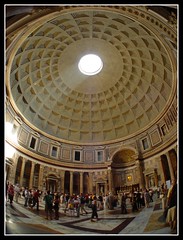
Sometime during these musings I have fallen back in line behind Odlef, and I fully awaken as he comes to a stop. Look up, there is a heavy solid dome stretched above our heads, an open circle at the apex, a sunbeam shining through the cool moist air onto marble floors. This is the Pantheon.
Walking now, marching twenty strides behind Odlef, a clumsy limp and with each step a wince of pain from the blister on my pinky toe. This little piggy is squealing “SHIT FUCK PISS” all the way home. The sun beats on Rome, bakes the stones and I walk on the coals. Dry air sucks moisture from my eyes. Trembling, hungering, baking, I fall out of the flowing current of pedestrians to lean against a wrought iron fencepost. I try to find my happy place inside my head, but all of my memories seem far away, across the ocean. But here’s one now: childhood days sprawled on the grass with the family dog. Playing kick-the-can with Mike and Jane. First snow of the year and I’m standing at the neighbor’s door, “Can Jane come out and play?” There now, something looks familiar. I remember every detail about a split second of those days.
Sometime during these musings I have fallen back in line behind Odlef, and I fully awaken as he comes to a stop. Look up, there is a heavy solid dome stretched above our heads, an open circle at the apex, a sunbeam shining through the cool moist air onto marble floors. This is the Pantheon.
Subscribe to:
Posts (Atom)